


News
For buyers and finance decision-makers, packaging is more than appearance—it directly shapes long-term margin in home fragrance lines. From cost control and transport efficiency to shelf impact and repeat orders, the right choices matter. Whether sourcing home fragrance, Aromatherapy Products, or even related categories like Pipe Cleaning Agent, understanding packaging strategy helps reduce waste, protect brand value, and improve profitability over time.
Why packaging decisions have a direct impact on long-term margin
In the daily chemical products sector, margin is rarely determined by formula cost alone. For home fragrance products, packaging affects unit economics across at least 4 stages: filling, storage, transportation, retail presentation, and after-sales handling. A bottle, jar, cap, label, and outer carton may look like a small cost line, but over 3 to 12 months of repeat procurement, the wrong structure can create hidden expenses that finance teams feel immediately.
Procurement teams usually focus on ex-factory price, while finance approvers look at total cost per sellable unit. These are not the same. A low-cost package that leaks, scratches easily, or increases breakage during transit can raise replacement, refund, and repacking costs. In home fragrance packaging, even a difference of 1 damaged case per shipment batch can reduce planning accuracy and weaken retailer confidence.
This is especially important for brands expanding across online and offline channels. E-commerce packs need drop resistance and compact dimensions. Shelf-display packs need visual consistency and premium touch. Gift-oriented fragrance lines often require secondary packaging. If one packaging format cannot balance these channel needs, margin dilution often appears within the first 2 to 3 reorder cycles.
An experienced manufacturing partner can reduce that risk early. Since its establishment in 2015, the company has expanded from an initial 400 square meters to a larger industrial base, added multiple business departments in 2019, established a home washing and care factory in 2020, and launched a second factory in 2021. Located in Linyi, Shandong, with more than 160 employees, the company is positioned to support buyers who need scalable packaging coordination, stable production rhythm, and practical cost control in daily chemical goods.
The 5 margin levers finance teams should track
- Material cost per unit, including glass, plastic, cap, wick, label, and shipper carton.
- Packing efficiency, such as filling speed, sealing consistency, and labor time per 1,000 units.
- Transport utilization, including case count per pallet, carton crush resistance, and dead space ratio.
- Damage and returns exposure, especially for fragile or leakage-prone formats.
- Shelf conversion effect, where design quality influences repeat purchases and retail acceptance.
Which packaging choices usually increase or protect profit?
Not every premium-looking package supports healthy margin. In home fragrance, packaging choices should be judged by cost-to-performance balance rather than by visual appeal alone. Buyers often compare glass against PET, rigid box against folding carton, and decorative cap against standard cap. The right answer depends on sales channel, order volume, shipping distance, and target retail positioning.
For example, glass often enhances perceived value and fragrance stability, but it may raise transport cost and breakage risk. PET or other practical plastics can reduce weight and simplify logistics, yet may not suit every premium positioning strategy. Secondary packaging also changes margin logic. A strong carton can improve bundle presentation and reduce transit scuffing, but overbuilt structures add cost and reduce carton density.
The practical goal is to match packaging investment to the product’s actual selling path. If a product is sold in high-volume online channels, lighter primary packaging with better protective corrugate may produce better long-term margin than heavy decorative formats. If it targets boutique stores or gifting, perceived value may justify a more elaborate structure, but only when MOQ, refill frequency, and shipping loss are controlled.
The table below shows how common packaging choices typically influence procurement and finance evaluation in daily chemical and home fragrance projects.
For most buyers, the best packaging is not the cheapest component set. It is the format that keeps total delivered cost stable over 6 to 12 months while preserving sell-through quality. That is why comparison should always include freight, storage, handling loss, and reorder speed—not just the packaging invoice line.
A practical comparison mindset
When comparing suppliers, ask for at least 3 versions of the same packaging concept: entry, balanced, and premium. This helps finance teams understand the cost spread and lets procurement evaluate where visual value stops producing commercial return. It also improves internal approval because decision-makers can compare structure, decoration level, and delivery complexity side by side.
In related fragrance categories, compact packaging logic can also inspire efficient design. For instance, automotive fragrance formats often prioritize space efficiency and durability. A product such as Black Gentleman uses a 200g large-capacity cup holder design for automotive use, combines imported plant extracts with a four step purification method, and focuses on even fragrance distribution with long-lasting odor control. While its application is different, the packaging lesson is relevant: structure should serve actual use conditions first, then branding.
How to evaluate home fragrance packaging during procurement
A strong procurement process reduces margin erosion before mass production starts. In practice, buyers should use a 3-layer review method: primary packaging suitability, logistics readiness, and financial predictability. This is more reliable than judging samples by appearance alone. For daily chemical products, even small deviations in closure fit, label adhesion, or carton strength can affect warehouse handling and retail acceptance.
At the sample stage, request packaging review across 5 key checks: sealing consistency, scratch resistance, print clarity, dimensional compatibility, and drop-risk exposure. If the item is intended for cross-border or long-distance transport, assess moisture exposure and outer carton deformation after stacking. A 7 to 15 day sample validation cycle is common and often prevents far more expensive corrections after order confirmation.
For finance approvers, the most useful packaging report is one that translates technical choices into cost visibility. Instead of asking only for unit packaging price, ask for packed case count, estimated pallet loading logic, replacement risk points, and MOQ by packaging component. This gives a better view of cash flow, especially when fragrance lines include several SKUs with different decoration levels.
Manufacturing coordination matters here. With an expanded factory base, multiple business channels developed since 2019, and more than 160 employees, the company can better support packaging synchronization across sourcing, filling, labeling, and shipment planning. That reduces delays caused by mismatched materials or fragmented supplier communication.
Procurement checklist for margin-safe packaging
- Confirm whether the package fits the intended channel: retail shelf, e-commerce parcel, gift box, or mixed distribution.
- Check MOQ and lead time for each component, because bottle, cap, label, and carton often follow different replenishment cycles.
- Review the packing ratio per inner box and outer carton to avoid paying for unnecessary air volume.
- Ask whether replacement components can be standardized across 2 to 5 SKUs to lower inventory pressure.
- Verify artwork and label durability under common storage conditions such as humidity fluctuation and handling friction.
What finance teams should request before approval
Finance does not need every technical detail, but it should request 4 practical inputs before sign-off: packaging BOM summary, component MOQ exposure, estimated delivery window, and expected risk points in shipping or storage. For standard home fragrance packaging, lead time often falls in the 2 to 4 week range after artwork and component confirmation, but custom structures may take longer depending on decoration complexity.
This approval method is particularly useful when comparing one-time promotions against recurring fragrance lines. Promotional packs can tolerate higher packaging cost if inventory turns quickly. Core SKUs usually need stronger margin discipline, better standardization, and fewer unique components.
Cost structure, hidden expenses, and better alternatives
In home fragrance packaging, hidden cost usually appears in 3 places: freight inefficiency, handling damage, and slow replenishment. A package that looks strong in the sample room may still create weak margin if it wastes carton space or needs too many manual packing steps. Cost control therefore depends on structure simplification as much as on material price negotiation.
One common mistake is over-specifying decorative elements on mid-range products. Foil stamping, heavy rigid boxes, specialty inserts, and multi-part accessories can quickly raise per-unit spend. If these additions do not improve reorder rate or retail acceptance, they become pure cost. A more balanced option is to keep primary packaging clean, use efficient carton engineering, and reserve premium decoration for high-value campaigns or seasonal launches.
Another mistake is underestimating standardization. If 3 to 6 SKUs can share the same cap size, label base, or outer carton footprint, buyers gain stronger purchasing leverage and lower replenishment complexity. This is one of the most practical ways to protect long-term margin in daily chemical categories where packaging variation can quickly outgrow actual market need.
The following table helps buyers compare visible and hidden packaging cost factors during supplier review.
The main takeaway is simple: if packaging complexity rises faster than sales value, margin weakens. Buyers should therefore compare at least 2 alternatives for every major packaging decision—one optimized for logistics and one optimized for presentation. That dual-track review makes budget approval more defensible and reduces unpleasant surprises after the first production run.
Better alternatives without hurting brand image
- Replace fully rigid gift packaging with a reinforced folding carton for regular sales batches.
- Standardize closures and internal dimensions across multiple fragrance variants.
- Use selective decoration only on customer-facing panels instead of full-surface premium treatment.
- Separate campaign packaging from core SKU packaging to avoid permanent cost inflation.
What about compliance, delivery control, and supplier stability?
For procurement and finance teams, margin protection is not only about cost. It also depends on whether the packaging program can be executed consistently over time. In daily chemical products, stable supply requires disciplined coordination between formula filling, packaging material arrival, artwork control, and final packing inspection. Delays in any one node can extend delivery or create incomplete shipments.
That is why supplier stability matters. A company that has expanded through multiple development stages—from its 2015 launch, to industrial park growth, to the establishment of a home washing and care factory in 2020 and a second factory in 2021—can often provide stronger coordination for multi-step orders. This is valuable when buyers need mixed orders, custom packaging, or phased delivery windows across 2 or more channels.
On the compliance side, buyers should align packaging with common labeling, transport, and material expectations in target markets. Exact requirements vary by destination and product type, so the safest approach is to confirm label content, material compatibility, storage guidance, and outer carton marking before production. For export or retailer programs, this check should happen at least 1 cycle before final mass order approval.
A structured service process also helps finance teams because it reduces unplanned cost. Instead of reacting to packaging issues after production, buyers should work through a clear pre-order sequence.
A 4-step service flow that reduces delivery risk
This kind of 4-step approach is especially useful when product families include home fragrance alongside adjacent daily chemical categories. It keeps packaging decisions commercially disciplined and avoids fragmented sourcing that can erode margin over time.
FAQ for buyers and finance approvers
How do I choose between premium packaging and cost-efficient packaging?
Start with channel and reorder logic. If the product is expected to sell through e-commerce or frequent distribution cycles, prioritize compact dimensions, protection, and standardized components. If the line is designed for gifting or premium shelf display, higher packaging investment may be justified. A good rule is to compare 2 to 3 packaging levels before approval and calculate total delivered cost, not only unit packaging price.
What are the most common hidden packaging costs in home fragrance?
The most common hidden costs are freight inefficiency, breakage or leakage, slow packing speed, and excess SKU complexity. Buyers often notice these only after the first shipment or first quarter of replenishment. That is why sample review should include carton logic, stacking practicality, and component standardization, not just visual approval.
How long does packaging validation usually take?
For standard projects, a sample and packaging confirmation cycle often takes about 7 to 15 days, depending on artwork readiness and component availability. More customized structures can take 2 to 4 weeks or longer. It is better to allocate time at the front end than to risk delays or rework after procurement approval.
Can one supplier support both product and packaging coordination?
Yes, and that often improves margin control. When a manufacturer can coordinate product filling, packaging sourcing, labeling, and shipment planning in one workflow, communication gaps are reduced. This is particularly helpful for daily chemical buyers managing multiple SKUs, mixed channels, or recurring orders with packaging variations.
Why choose us for packaging-conscious home fragrance sourcing?
For buyers and finance decision-makers, the value of a supplier is measured by execution, not promises. Our development path—from establishment in 2015, factory expansion, acquisition activity in 2018, multi-channel business growth in 2019, the home washing and care factory in 2020, and the second factory in 2021—shows a practical ability to scale operations with market demand. With more than 160 employees in Linyi, Shandong, we support daily chemical sourcing with better coordination across production and packaging stages.
We can help you evaluate home fragrance packaging from a margin perspective, not only a design perspective. That includes product positioning review, packaging selection suggestions, packed-case logic, lead time discussion, and structure alternatives for different budgets. If your project also spans adjacent fragrance or odor-control formats, we can discuss practical packaging references, including compact application-led ideas similar to Black Gentleman.
You can contact us to discuss 6 concrete topics: packaging parameter confirmation, product and packaging matching, delivery cycle planning, custom structure options, labeling or compliance considerations, and sample support before quotation finalization. This helps procurement teams compare options more clearly and allows finance teams to approve budgets with better visibility.
If you are reviewing a home fragrance line and want to improve long-term margin, share your target channel, packaging preference, expected order volume, and timeline. We can help you identify where cost can be reduced, where packaging value should be protected, and how to build a more stable sourcing plan for repeat orders.
Related Products
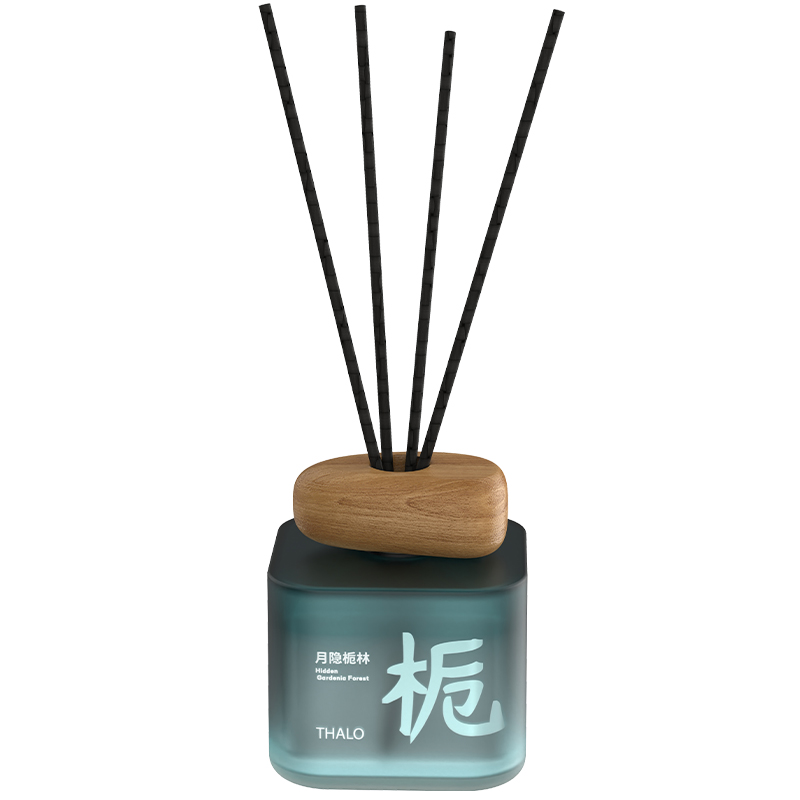
 ZHICHUNLet Nature Fill Your Space With Fragrance,Turn an ordinary room into a peaceful fragrance retreat. Thalo “Spring Awakening” Reed Diffuser brings the beauty of Oriental-inspired scents into everyday life, creating a warm and elegant atmosphere without flame, smoke or electricity.
Inspired by nature, the 180ml Home Fragrance Collection features three distinctive scents: Moonlit Gardenia Forest, Wumu Gradually Becomes Spring, and Green Tea Reflection Spring. Each fragrance unfolds gently through high-density reed sticks, filling your space with a continuous and refined aroma.
The frosted glass bottle, wood-inspired cap and minimalist design add a sophisticated decorative touch to any interior. Perfect for bedrooms, living rooms, bathrooms, offices, boutiques and hotels, this Natural Reed Diffuser creates a relaxing fragrance experience while helping refresh indoor air.
Bring a touch of spring, nature and tranquility into every moment with Thalo. XiaoxiangyuTitle: The Car Air Freshener That Keeps Every Mile Fresh
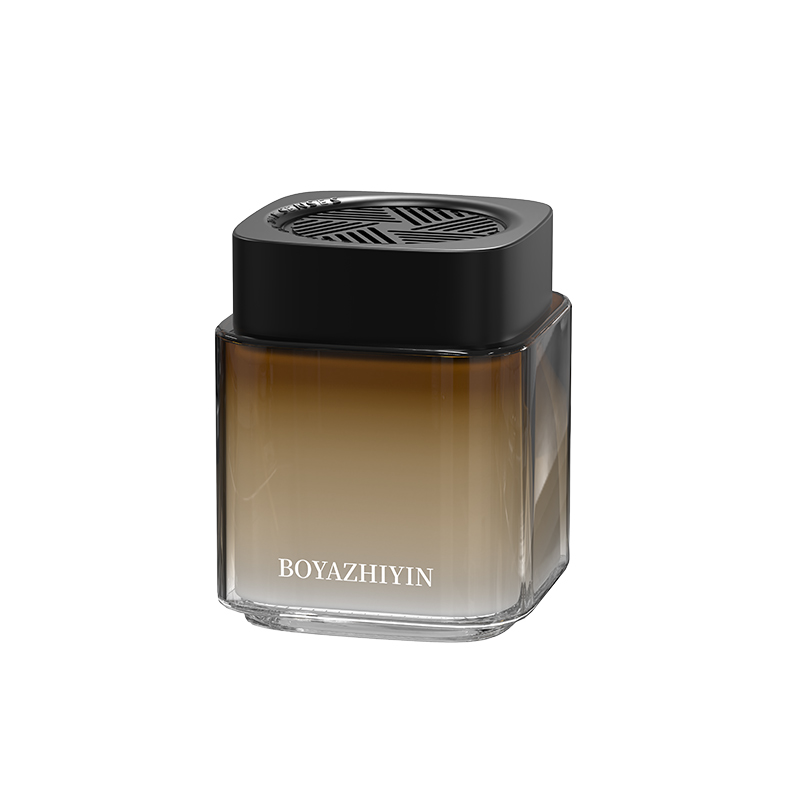
Every drive deserves a fresh, calming atmosphere. The BOYAZHIYIN car air freshener turns your car into a private sanctuary of natural scent. Crafted specifically for small spaces, this long lasting car air freshener delivers pure botanical fragrance without the dizzying intensity of ordinary car perfumes. Our solid gel formula releases scent steadily for weeks, keeping your cabin inviting from the first mile to the last. Each glass jar is built to impress, with a crystal-clear body and a striped diffusion lid that spreads fragrance evenly through every corner. Choose from four refined scents: Oud Rose, Wild Cologne, Dew Gardenia, or High Mountain White Tea. Made with plant essential oils, it is a natural car air freshener you can trust every single day. Breathe easier, drive happier, and enjoy a car that always smells as good as it looks. Ling FengTurn Every Drive Into a Fragrance Ritual
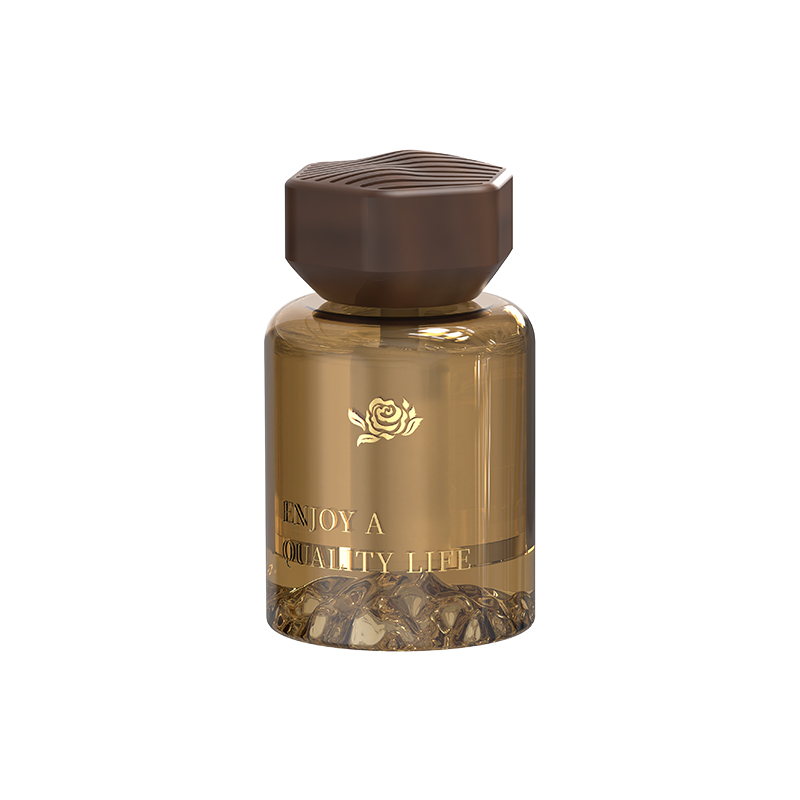
Step into your car and let a refined fragrance transform the atmosphere instantly. Designed for those who appreciate elegance in every detail, this premium car fragrance combines a sophisticated bottle design with high-quality fragrance oils to make every journey more enjoyable.
With 24-hour long-lasting diffusion and a 360° fragrance experience, the scent spreads evenly throughout your car without feeling overpowering. The oil-based formula helps maintain a smooth and consistent aroma, while perfume-grade fragrance creates a more layered and elegant scent experience.
From the fresh and delicate character of Misty Longjing to the deeper, sophisticated notes of Classic Cologne, every fragrance tells its own story. Black KnightA Fragrance That Turns Any Space Into a Memory
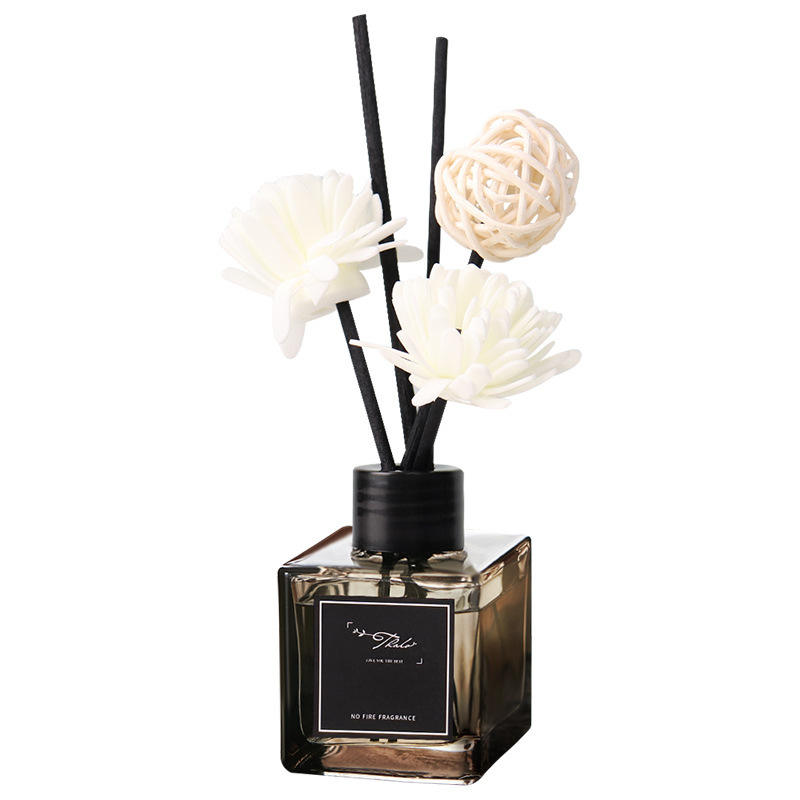
Bring nature indoors with Thalo Botanical Reed Diffuser, a premium home fragrance designed to transform everyday spaces into moments of calm. Crafted with botanical-inspired ingredients and imported fragrance oils, it releases an elegant, long-lasting aroma without flame or smoke.
The 50ml reed diffuser combines a deep brown bottle with high-density fiber reeds and handmade botanical dried flowers, creating both a beautiful decorative piece and an effective air freshener. From peaceful bedrooms to sophisticated living rooms, boutiques, hotels, exhibitions and special events, it adds a refined fragrance wherever you place it.
Choose a scent, place the diffuser, and let the fragrance unfold naturally.
Thalo — bringing the beauty of nature into every memorable moment.
Can't find what you're looking for ?
Leave a Message we will call you back quickly!
Professional Service
Interested? Leave your contact details.
Search Starts Here

